




Your Postpartum Mental Health Plan: Make One Like Your Life Depends On It
You've probably got everything the baby needs. The bassinet is sorted. The nappies are stacked. You've probably done antenatal classes, read the books, and hopefully sorted your postpartum recovery products too (wink wink). The baby is prepared for.
But who's preparing for you?
Somewhere between the final midwife visit and the rest of your life, the conversation about your mind tends to go quiet. The focus shifts. The check-ins slow down. And the person who just did the most enormous thing a human body can do is left to quietly figure out what's happening inside her head, often alone, often while pretending she's fine, often while everyone around her is focused on the baby.
Your identity is shifting. Your hormones are in freefall. You might be grieving a birth that didn't go to plan, a version of yourself that feels unreachable, a life that looks completely different to the one you had six months ago. You might be feeling everything at once, or frighteningly nothing at all.
None of that gets put on the gift registry.
Your baby doesn't need the perfect nursery or 300 swaddles or the best monitor. They need you, which means you need to be held, too. Your mind needs tending. Your mental health is not a side note to your recovery. It is your recovery.
Here's a guide to help to build that plan.
First, though: let's talk about matrescence
You've probably heard of adolescence. The total identity overhaul that happens between childhood and adulthood, the mood swings, the disorientation, the sense that who you were before isn't quite who you are now.
Matrescence is the same thing. But it happens when you become a mother.
The term was coined by medical anthropologist Dana Raphael in the 1970s and has been championed more recently by reproductive psychiatrist Dr. Alexandra Sacks. And yet despite the fact that it describes one of the most universal human experiences, the psychological, neurological, hormonal, and identity-level transformation of becoming a mum, most women have never heard of it.
Here's what matrescence actually looks like:
- Loving your baby fiercely and also grieving your old life, simultaneously, without contradiction
- Feeling like a stranger in your own mind, like the person you were before has gone somewhere you can't find her
- Swinging between profound meaning and complete overwhelm, sometimes within the same hour
- Mourning things you can't even name
This is not a breakdown. This is not PND (though PND is also real and also deserves support). This is the normal, expected, completely under-discussed process of becoming someone new.
Why high-achieving mums find postpartum the hardest
Let's be honest about something.
If you've spent your life being good at things, getting results, executing plans, solving problems with effort and intelligence, postpartum will knock you flat in a way that nothing else has.
The loss of control that comes with a newborn is profound and relentless, and for women who have spent their adult lives succeeding through competence and effort, it can be the first real experience of genuine helplessness they've ever had. That dissonance is brutal. And it's barely ever talked about.
The shame compounds it. When you've always been capable, feeling incapable feels like a character flaw. It isn't. It's a mismatch between the skills that got you here and the skills this season actually needs. Postpartum doesn't reward effort. It rewards surrender, softness, and asking for help, all things that high-achievers tend to be spectacularly bad at.
Naming this doesn't fix it. But it does make you feel less alone in it.
What goes in a postpartum mental health plan
A mental health plan is not a vision board. It's not toxic positivity. It's a practical document with names, numbers, warning signs, and anchors, written when you're relatively okay, so it's there when you're not.
Think of it like a fire exit plan. You don't wait until the building is on fire to figure out where the stairs are.
Here's what yours needs:
1. Regular check-ins with yourself
Schedule them. Weekly, not just when you're already drowning. The check-in isn't about performing wellness, it's about honest accounting. Try asking yourself:
- Am I sleeping in blocks longer than three hours at least some of the time?
- Am I eating actual food, not just forgetting to eat and then inhaling crackers at 11pm?
- Am I crying more than usual, or not at all, which can be its own warning sign?
- Do I feel connected to my baby, my partner, myself?
- Does anything feel better or worse compared to last week?
You don't need the answers to be good. You need them to be honest.
2. Your partner and your village
This section has names in it. Actual names.
Who is the person you can call at 2am without feeling like a burden? Who is the person who will notice if you've gone quiet? Who is your GP, your midwife, your and do you have their numbers saved?
Most importantly: tell these people what you need before you need it. That conversation might sound like:
Say it now, while you have the time to say it clearly.
3. Your early warning signs
Everyone's warning signs are different. Some women get flat and quiet. Some get rageful. Some lose their appetite. Some stop being able to enjoy anything. Some start having intrusive thoughts that frighten them.
None of these are moral failures. All of them are signals worth paying attention to.
Write yours down, or your best guess at what they'll be, if you're doing this before baby arrives. Share them with the people on your list. Give them permission to say something if they notice the signs even when you don't.
Signs that are worth taking seriously and talking to a professional about include:
- Persistent low mood or tearfulness beyond the first two weeks postpartum
- Feeling detached from your baby or like you're watching your life from the outside
- Intrusive, distressing thoughts (these are more common than you think and not a sign of danger, but they deserve support)
- Significant anxiety, especially spiralling "what if" thoughts
- Not wanting to leave the house or be around people
- Feeling like your baby, your partner, or the people around you would be better off without you
If any of these resonate: please talk to your GP or midwife. Perinatal mental health support in NZ has improved significantly, and you deserve access to it. You do not have to wait until it gets worse.
4. Your glimmers
You've probably heard the word "trigger", something that activates a stress response in your nervous system. A glimmer is the opposite. It's a tiny moment of safety, warmth, connection, or joy that tells your nervous system: you're okay. Right now, in this moment, you're okay.
Glimmers are not grand gestures. They're:
- The first sip of coffee before the house wakes up
- Morning light coming through the curtains
- Your baby's weight on your chest
- The smell of your baby's head
- A text from a friend that makes you laugh
- Getting outside and feeling the wind on your face
Learning to notice your glimmers and genuinely paying attention to them instead of rushing past them, is not a cliché. It's nervous system regulation. It's protective. Write yours down and put them in the plan.
5. What fills your cup right now
Not what used to fill your cup. Not what you think should. What actually does, in this season, with this body, this life, this level of sleep deprivation.
Some of what filled your cup before, long runs, social events, ambitious projects, nights out, these might not be available or restorative right now. That's okay. Something else is.
For a lot of postpartum women, the cup-fillers are smaller and simpler than they expected: ten minutes outside with the pram. A shower where you actually wash your hair. A phone call with a friend while the baby sleeps. A meal you didn't have to make.
Start there.
6. Your practical anchors
These four things are not optional. They are the foundation.
Sleep. This is the non-negotiable. Sleep deprivation is not a badge of honour, it is a genuine mental health crisis that accumulates. You cannot think straight, regulate your emotions, or be present for your baby on no sleep. Even one longer stretch changes things. Plan for it. Ask for it. Accept help to get it.
Get outside. Every single day if you can. Even for fifteen minutes. Even if it's cold. Light and movement do something to postpartum hormones and nervous systems that cannot be replicated indoors. The pram is a tool. Use it.
Breathe. This sounds like a wellness cliché. It isn't. Box breathing (four counts in, four hold, four out, four hold) activates the parasympathetic nervous system and takes forty-five seconds. Do it when you're about to cry in a supermarket. Do it at 3am. Do it before you respond to anything.
Get off social media. The curated feeds, the perfect babies, the women who look amazing six weeks out, is actively harmful to your mental health. This is not a personal failing. It's neurological. The comparison mechanism doesn't care that you know it's filtered. Mute liberally. Take breaks. Choose connection over consumption.
Affirmations for the hard moments
Affirmations are not toxic positivity. They're a pattern interrupt, a way to introduce a different thought into the loop when the inner critic gets loud.
Try these:
I'm learning. It's okay that I don't know everything yet.
I am enough for my baby. My baby doesn't need perfect. They need me.
This is temporary. How hard it is right now is not how hard it will always be.
Asking for help is not a weakness. It's how this works.
I am in the middle of something huge. I am allowed to find it hard.
Write one on a Post-it. Stick it on the bathroom mirror. Roll your eyes at it for a week and then notice that it's actually helping.
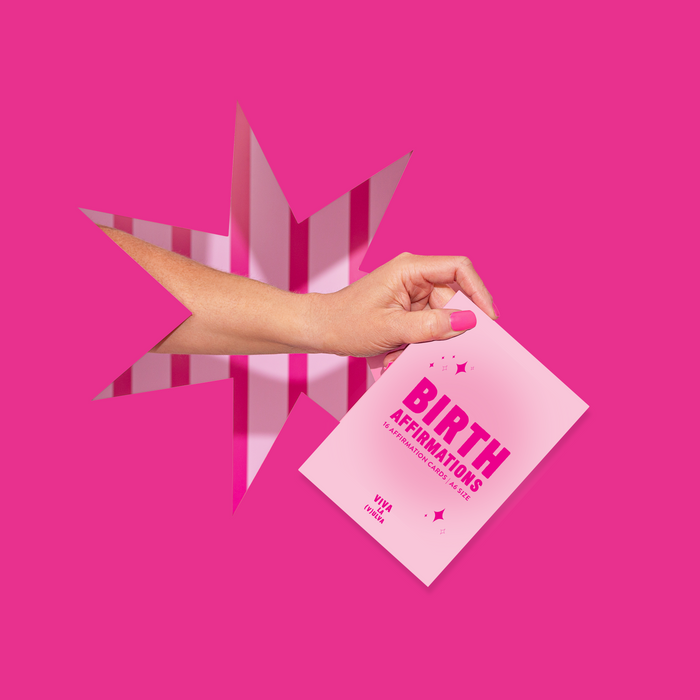
We also have some affirmation cards already made here
Your recovery matters. Your mind matters. Both things are true at the same time.
Download your free Postpartum Mental Health Plan
We've created a free printable worksheet you can fill in, print out, and stick on the fridge. It takes about ten minutes to complete and covers everything in this post: your check-in schedule, your village, your warning signs, your glimmers, your cup-fillers, and your practical anchors.
Fill it in before baby comes if you can. Or in those first slow weeks. Share it with your partner.
This post is written with love and is not a substitute for professional medical or mental health support. If you're struggling, please reach out to your GP, midwife, or call or text 1737 (NZ's free mental health helpline) any time.
Love, Viva La Vulva xx